





















Men's medieval Shirts & Tunics


Men's Tunics

-
Viking Coat Loki Blue -
Tunic Tyr Herringbone Burgundy/Grey -
Pirate Shirt Natural -
Wool Tunic Lodin Dark Grey -
Dungeons & Dragons Barbarian Shirt Black Dungeons & Dragons Barbarian Shirt Black
$44.99 USDDungeons & Dragons Barbarian Shirt Black
$44.99 USD -
Hooded Long Tunic Renaud Black -
Tunic Tyr Herringbone Olive/Grey -
Viking Coat Loki Dark Grey -
Dungeons & Dragons Fighter Tunic Hemp/Brown Dungeons & Dragons Fighter Tunic Hemp/Brown
$99.99 USDDungeons & Dragons Fighter Tunic Hemp/Brown
$99.99 USD -
Viking Coat Loki Brown -
Tunic Tyr Herringbone Black/Grey -
Tabard Thibaud Natural -
Right Side Surcoat Aleran Red -
Wool Tunic Lodin Grey -
Button Shirt Natural -
Summer Lace-Up Shirt Aton Natural -
Button Shirt Black -
Tunic Blue -
Pirate Shirt Black -
Left Side Surcoat Aleran Red -
Tunic Ekwin Black -
Right Side Surcoat Aleran Yellow -
Right Side Surcoat Aleran Natural -
Left Side Surcoat Aleran Blue -
Viking Coat Loki Red -
Tunic Green -
Long Tunic Arnaud Natural -
Wool Tunic Lodin Brown -
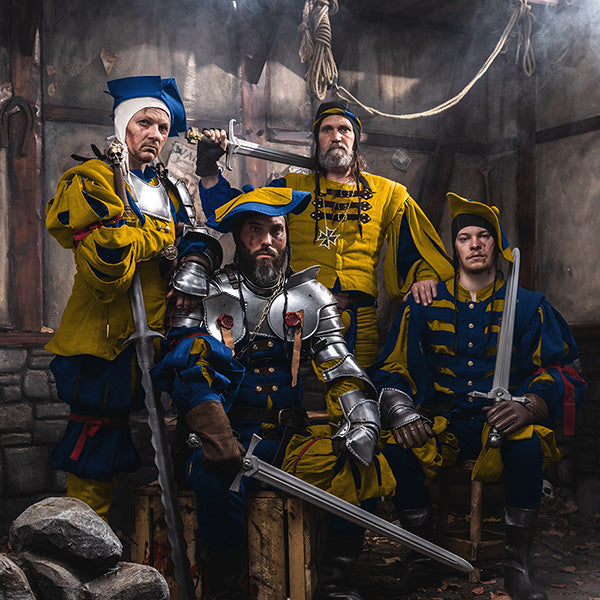
Shirt Landsknecht Green Black -
Tunic Ekwin Brown -
Left Side Surcoat Aleran Black -
Left Side Surcoat Aleran Yellow


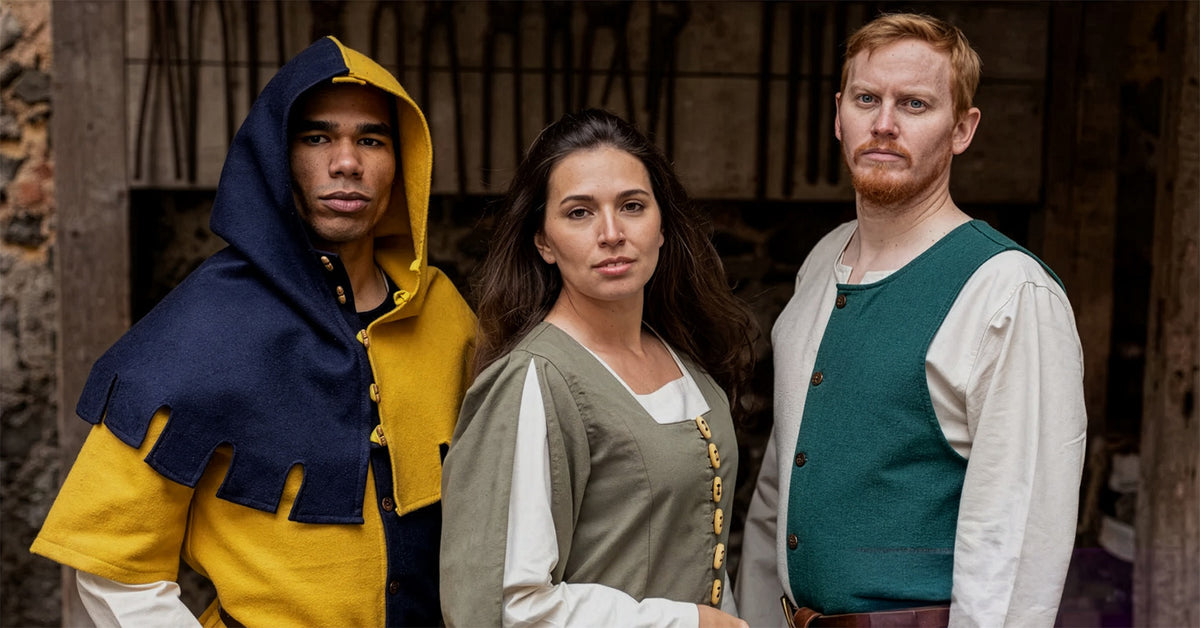
Medieval Tunics, Shirts, Surcoats & Tabards for Men
In the Middle Ages, clothing played an important role in showing social status and membership of a particular social class. Tunics, shirts, surcoats or tabards were central components of men’s wardrobes.
Medieval Tunics
The tunic (Latin: tunica) was the basic overgarment of medieval gentlemen. It usually reached from the shoulders to the knees or thighs. The material, cut and decoration varied depending on the wearer’s status and wealth:
- Simple peasant and artisan tunics were usually made of woolen fabric or linen and kept relatively simple.
- For nobles and the wealthy, tunics became increasingly elaborate. They were made from finer fabrics such as silk or trimmed with velvet and were often decorated with embroidery, braids or fur trimmings.
-
For special occasions such as festivals or ceremonies, aristocrats wore splendid ceremonial garments with rich decorations.
Medieval Shirts
The chemise (Latin: camisia) was the basic undergarment worn directly on the skin. It usually reached down to the thighs and had wide, sometimes even floor-length sleeves. Poorer men wore simple, linen-like shirts, while the shirts of noblemen were made of finer cotton or linen fabrics.
A men’s medieval shirt was often paired with other garments, such as tunics or surcoats, to create layered outfits that balanced practicality and elegance.
Medieval Surcoats or Tabards
In medieval fashion, surcoats were traditionally sleeveless, floor-length robes worn over a tunic, often adorned with heraldic symbols to signify nobility or allegiance. Tabards, on the other hand, were shorter, functional garments commonly used by heralds or soldiers.
At Burgschneider, the term surcoat captures the spirit of medieval overgarments in all their versatility. From long, flowing designs inspired by knightly attire to shorter, more practical styles, our surcoats bridge historical inspiration with modern functionality. This flexible approach allows wearers to choose the perfect piece for historical reenactments, cosplay, or everyday medieval-inspired fashion.
Men's Medieval Shirts, Tunics and Surcoats in Context
Each garment, whether a men’s medieval shirt, a men’s medieval tunic, a surcoat, or a tabard, played a vital role in defining a man’s appearance and identity during the Middle Ages. Together, they created outfits that were both practical and symbolic, reflecting the values and culture of the time.
Bring the timeless elegance of the Middle Ages into your wardrobe – explore our collection and find the perfect surcoat, tunic, tabard, or shirt to complete your look.
Looking for women's styles? Discover our Medieval Tunics & Shirts for Women.


