




















Kiewer Rus


Kyiver Rus


-
Linke Seite Haube Dangereuse Schwarz -
Linke Seite Haube Dangereuse Blau -
Linke Seite Haube Dangereuse Grün -
Linke Seite Haube Dangereuse Natur -
Linke Seite Haube Dangereuse Rot -
Linke Seite Haube Dangereuse Gelb -
Linke Seite Surcot Aleran Schwarz -
Linke Seite Surcot Aleran Blau -
Linke Seite Surcot Aleran Grün -
Linke Seite Surcot Aleran Natur -
Linke Seite Surcot Aleran Rot -
Linke Seite Surcot Aleran Gelb -
Linke Seite Wappenrock Auderic Schwarz -
Linke Seite Wappenrock Auderic Blau -
Linke Seite Wappenrock Auderic Grün -
Linke Seite Wappenrock Auderic Natur -
Rechte Seite Haube Dangereuse Schwarz -
Rechte Seite Haube Dangereuse Blau -
Rechte Seite Haube Dangereuse Grün -
Rechte Seite Haube Dangereuse Natur -
Rechte Seite Haube Dangereuse Rot -
Rechte Seite Haube Dangereuse Gelb -
Rechte Seite Surcot Aleran Schwarz -
Rechte Seite Surcot Aleran Blau -
Rechte Seite Surcot Aleran Grün -
Rechte Seite Surcot Aleran Natur -
Rechte Seite Surcot Aleran Rot -
Rechte Seite Surcot Aleran Gelb -
Rechte Seite Wappenrock Auderic Schwarz Rechte Seite Wappenrock Auderic Schwarz
£29.99 GBPRechte Seite Wappenrock Auderic Schwarz
£29.99 GBP -
Rechte Seite Wappenrock Auderic Blau -
Rechte Seite Wappenrock Auderic Grün -
Rechte Seite Wappenrock Auderic Natur


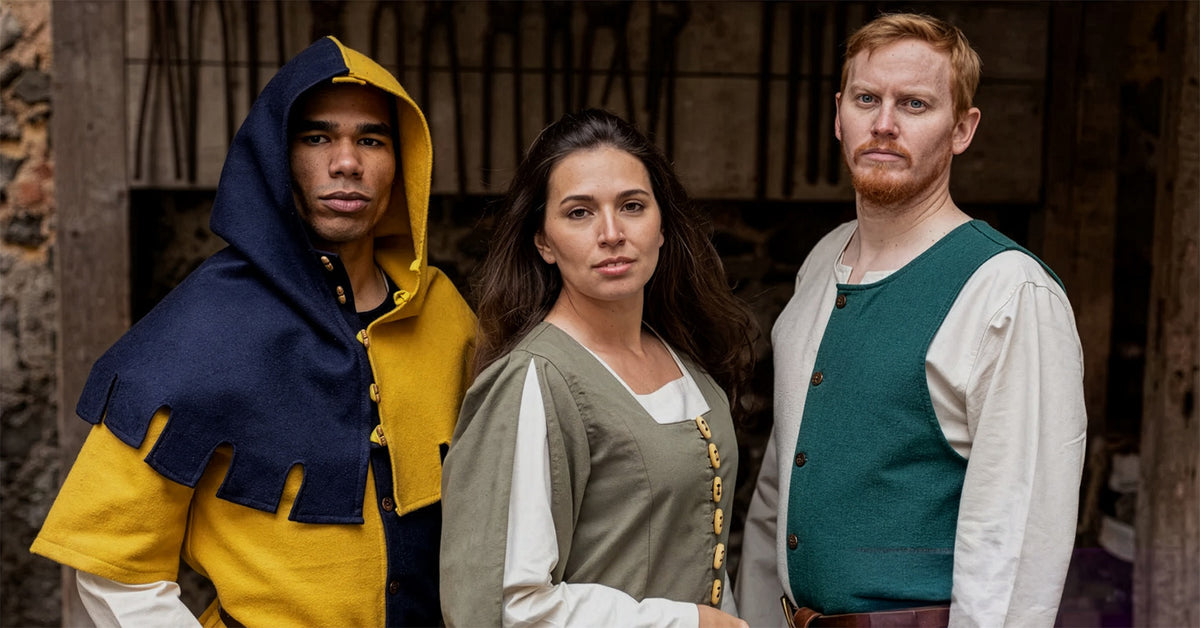
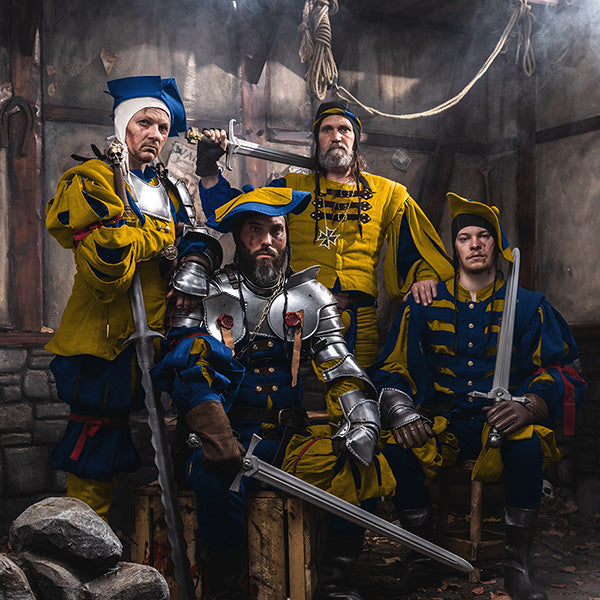
Popular from the 11th to the 16th century, the “Mi-parti” (parti-colored) style of clothing featured two different colored fabrics joined together in the middle. The effect is a contrast of colors, which often provides a dramatic appearance. During the Middle Ages, Mi-parti was a prominent style amongst surcoats, tabards, cowls, legwear, and dresses.
The earliest depictions of this style go as far back as the 9th and 10th centuries when the parted fabric style was used in leg and footwear. For example, boots would be half one color and half another. During the High Middle Ages, the Mi-parti style became increasingly popular as color symbolism in garments became more prevalent. Colors often indicated a certain status or affiliation. Throughout the 13th and 14th centuries, the style was increasingly worn as many men, particularly vassals, emulated the coats of arms of their feudal lords. The style gradually tapered off towards the end of the 16th century.
Mi-Parti in Popular Culture
Mi-parti clothing has long been a popular choice for filmmakers and directors aiming to capture the atmosphere of the Middle Ages. It is often seen in historical features, such as Ridley Scott's Kingdom of Heaven, which was set in 12th-century Jerusalem, and The Outlaw King, which details Robert the Bruce’s battle to regain Scotland’s Independence from England. Mi Parti also features in several fantasy films and series, which take heavy influence from the medieval era, such as HBO’s Game of Thrones and Disney’s Sleeping Beauty. This style serves as an iconic symbol for this time period and can be used to truly capture the setting for maximum impact.


